Showing posts with label wildlife photos. Show all posts

Polar Bears

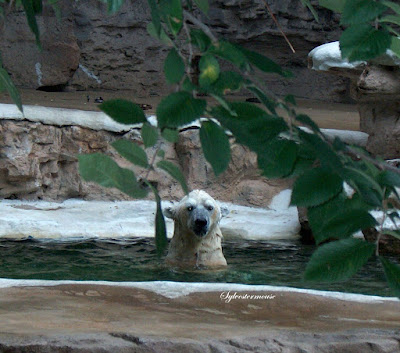
https://amazing-wild-animals.blogspot.com/ Since Polar Bears live in the Arctic, most of us will only ever see them in zoos.  In their natural habitat, their white fur helps to camouflage them against the ice of their region.  However, that white fur is quite a contrast to the greens and browns of other terrains.

The Polar Bear has a longer neck than other bears which allows them a longer reach when hunting their aquatic prey.   They have huge paws with bumpy pads that naturally help them get a grip in the ice of their Arctic region.  They have small ears & short tails which helps reduce heat loss.


http://www.amazing-wild-animals.com/

Even though I enjoy seeing Polar Bears in zoos, I often feel quite sorry for them.  They are most often panting due to the heat.  Even in colder weather, it is rarely cold enough for a Polar Bear to be truly comfortable.   In the zoo, the bears cool down by swimming in the pools in their enclosures.  Several of the zoos that I have visited have viewing areas so you can watch the bears swim underwater.   It is entertaining for us to watch a bear swim, but for them, it is quite refreshing and a great reprieve from the heat.


Sea Bears 


Polar Bears are also referred to as Sea Bears.  They are actually the only bear classified by several countries as a marine mammal.  Their paws are also wide and flat which helps them to propel through water in spite of their massive size.  Think of a paddle on a boat and how it can move a boat even without current.

Polar Bears are excellent swimmers and have no trouble whatsoever swimming underwater.


http://www.amazing-wild-animals.com/

Facts About Polar Bears


http://www.amazing-wild-animals.com
  • Black Skin Covered with 2 Layers of White Fur
  • Height:  Up to 10 feet tall
  • Weight:   Up to 1100 lbs.
  • Life Span:  Up to 30 years
  • Nickname:  Sea Bear
  • Lives In:  Arctic Regions:  Alaska (US), Canada, Greenland, Russia & Norway
  • Food:  Seals, Reindeer, Fish, Seabirds, bird eggs and berries
  • Cubs:  1 - 4 Cubs born every 2 - 4 years
  • Currently:  Vulnerable Status, but numbers are decreasing


http://www.amazing-wild-animals.com/


Polar Bears You Can Take Home!


Note: The author may receive a commission from purchases made using links found in this article. “As an Amazon Associate I earn from qualifying purchases.”

Snowshoe Hare

The Beautiful Snowshoe Hare

Source:  CC by Wikimedia
We all ask at some point, why is this beautiful rabbit called a hare?

Believe it or not, there are actually several differences between a rabbit and a hare.  Physically the hare has longer ears and hind legs.  In general, the hare is just overall larger than a rabbit.

They also have different lifestyles.  The hare is a solitary animal while the rabbit enjoys living in groups.  The hare just makes a slight hole on top of the ground to sleep, while the wild rabbit prefers a burrow below ground.   At birth, the hare is fully furred, has his eyes open and will hop within moments of being born.  A baby rabbit is hairless and blind.  It must adjust to this new world before it is ready to "hop around."


The Snowshoe Hare


Denali National Park and Preserve
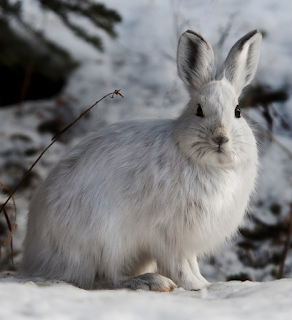
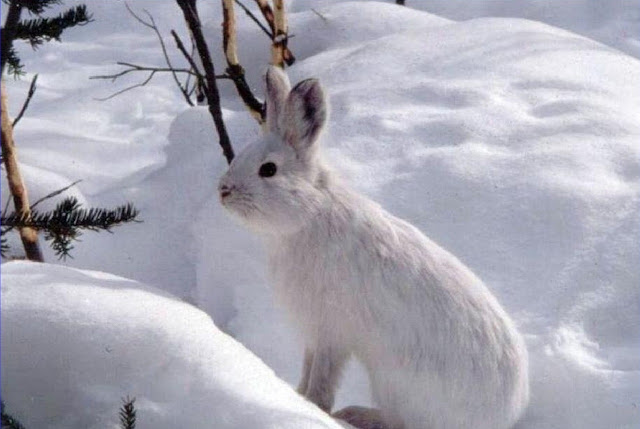
Like the Arctic Fox, the gorgeous fur on this hare changes color with the seasons.  In winter, the fur is white to match the snow.  In summer, the fur turns brown and serves as a marvelous camouflage in nature.  Just look how well he blends in on the picture.  You would probably completely overlook him in the wild.  When the hare hears a noise, he remains perfectly still.

The Snowshoe Hare also has fur on his feet to protect him from the freezing ground and I Personally think his black tipped ears are absolutely adorable.

He is called a Snowshoe Hare because of the tracks his large feet leave in the snow.  His toes can be spread out for balance and the wide toe and slender heel track resembles a snowshoe impression.

In addition to his leaping abilities, the Snowshoe Hare has remarkable running and swimming skills.  Thus, he is often able to avoid capture by a predator.

By D. Sikes via Wikimedia Commons
Source: CC-BY-SA-2.0


A Few Facts About the Snowshoe Hare


Snowshoe Hare Photo
  • Length: 16 - 21 inches
  • Weight: 2 - 4 lbs.
  • Lifespan: Up to 5 years (usually less than 1 yr)
  • Active mostly as night, dusk or dawn
  • They do not hibernate
  • Lives in North America Eats leaves, grass, evergreens, plants, bark or flowers Will eat meat if plant life is not available
  • They are accomplished swimmers
  • Can run up to 27 miles per hour
  • Can leap up to 10 feet in a single bound
  •  
     
     
    Snowshoe Hare Photo


More About the Snowshoe Hare


Bring home your own Snowshoe Hare!  You can learn more about the Snowshoe Hare with the book, play a game or snuggle with your won precious and beautiful Snowshoe Hare.  Any or all of these items would be awesome.


Note: The author may receive a commission from purchases made using links found in this article. “As an Amazon Associate I earn from qualifying purchases.”

Arctic Fox

Arctic Foxes

The Little Snow Fox


This pretty little fox, known as the Arctic Fox or Snow Fox, inhabits regions of the coldest climate on the earth.

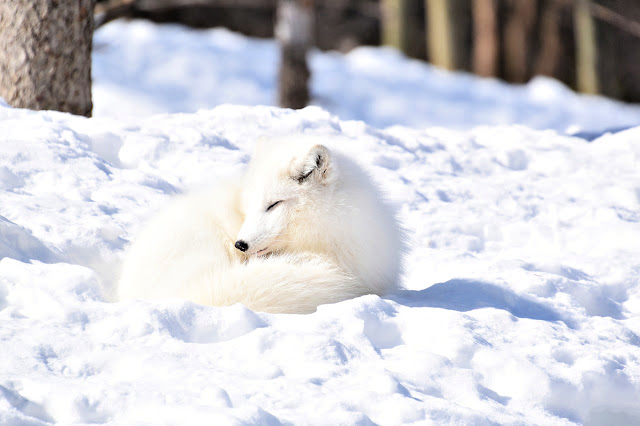
His beautiful fur changes colors with the seasons.  In winter, his fur is white, which is a wonderful camouflage in the snow.   In summer, his fur changes to brown and blends in with his surroundings.  I find this fascinating!

And just look at that sweet face.  Doesn't he make you want to reach out and pet him?


The Arctic Fox


Not only does the Arctic Fox have coloring changing fur, but he also has thickly haired foot pads, which insulate against the cold and provide traction on ice.  I personally love his fluffy tail which he uses to cover his face in the cold.

As you can well imagine, the Arctic Fox is an extremely adaptive creature.  He can either live in burrows or he can dig himself a snow tunnel for shelter.  He will eat either rodents, fish, birds or vegetables.  Sometimes he will even trail a polar bear and eat his leftovers for dinner.


Arctic Fox in the Snow


A Few Facts about the Arctic Fox

  • Weight: 6 - 15 lbs
  • Height: 10 - 13 in.
  • Lifespan: 5 - 10 years
  • Lives in: the entire Arctic including Russia, Quebec, Canada, Alaska and Greenland
  • The only member of the dog family whose coat changes color
  • The Arctic Fox is the only native land mammal to Iceland


The Arctic Foxes Coat


The Arctic Fox has the warmest coat of any mammal.  There are other animals that have more hair, but it is not as warm as the Arctic Fox.

This coat serves the Arctic Fox well since he lives in extremely cold places like the tundra along the Arctic Ocean.  In the winter, they are known to inhabit the frozen sea where they can survive by eating fish and sea birds.

Note of warning about the video:  This video does show some graphic images of Polar Bear and Arctic Fox hunting / eating in the wild.  However, you can see the Arctic Foxes seasonal coat colors.


Learn More about the Arctic Fox


 Arctic Fox: Life at the Top of the WorldCheck Price


Note: The author may receive a commission from purchases made using links found in this article. “As an Amazon Associate I earn from qualifying purchases.”

Poison Dart Frogs

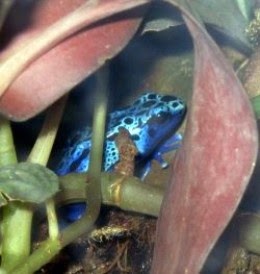
Poison Dart Frog Photo by Sylvestermouse
©Sylvestermouse -- All Rights Reserved
I am surrounded by Poison Dart Frogs!
When my son was just a little fellow, he adored Poison Dart Frogs. He has Dart Frog books, plush Dart frogs, plastic Dart Frogs, shirts with Dart Frogs and he even has Dart Frogs painted on his bedroom wall.  The only Dart Frog we don't have, is a live Poison Dart Frog.

However, there is always the zoo and we used to spend countless hours in the Herpetarium.

The Poison Dart Frog pictured here, is one of our favorites in our local zoo.


About Poison Dart Frogs 


Wall Mural ©Sylvestermouse - All Rights Reserved
These beautiful, brightly colored frogs are not always poisonous as their name would suggest.  Captive bred Dart Frogs are not poisonous while a wild Dart Frog is poisonous.

The difference is in what they eat. When they eat ants, centipedes or mites then they retain their meal's poison which in turn makes the Dart Frog poisonous to a potential predator.

Several chemicals from some these frogs are currently in experiments for use in medicine. It is hoped that their secretions can be developed as muscle relaxants, heart stimulants and appetite suppressants.

There is even one painkiller that is 200 times stronger than morphine, but has dangerous side effects.


Strawberry Poison Dart Frog, Rainforest, Costa Rica
Strawberry Poison...
Charles Sleicher
Buy This at Allposters.com

A Few Interesting Facts about Poison Dart Frogs


A few of my son's frogs on his bedroom shelves

  • Length: .59 in to 2.4 in.
  • Weight: approx. 2 - 8 grams
  • Lifespan: 1 - 3 years
  • Lifespan in Captivity: up to 10 years
  • More than 100 species varying in color & pattern
  • Named Dart Frogs because their toxins were used by American Indians on the tips of their blow-darts.
  • Live in the tropical environments of Central and South America
  • Many species are CRITICALLY ENDANGERED


Learn More About Poison Dart Frogs


All photos on this site are the exclusive property of Sylvestermouse and should not be copied without written permission.


Note: The author may receive a commission from purchases made using links found in this article. “As an Amazon Associate I earn from qualifying purchases.”

Micronesia Kingfisher

©Sylvestermouse -- All Rights Reserved
This beautiful bird is now extinct in the wild.   The last wild Micronesia Kingfisher was seen in 1988.  Less than 155 of these extraordinary birds reside in zoos, which are all participating in a breeding program with the hopes of starving off complete extinction of the Micronesia Kingfisher.

These precious little birds were a native species of Guam that was decimated by the accidental introduction of the predatory brown tree snake to the Micronesian islands during WWII by cargo ships and planes.

A small number of Micronesia Kingfishers were recently returned to the island, but continue to be held in captivity there.  They hope to be able to return them to the wild to a near-by snake-free island to once again freely inhabit their native area. 


More Facts about the Micronesia Kingfisher


Head-body length:  6" 
Wingspan:  8"
Weight:  2 - 2.6 ounces
Food:  Primarily insects, lizards, hermit craps or small crustaceans

Nest: In a hole in tall tree or coconut palm
Clutch Size:  Usually only 2 eggs

Usually live in pairs
Both parents tend their eggs


©Sylvestermouse -- All Rights Reserved

Sounding the Alarm


can even flap their wings fast enough to hover over water. - See more at: http://animals.sandiegozoo.org/animals/kingfisher#sthash.k4aEetU6.dpuf
It is said that you could tell time by the first call of the Micronesia Kingfisher each day because he "sounds the alarm" at the same time every morning, which is usually at dawn.

This is such a beautiful and precious bird.  I, for one, am really glad that someone sounded the alarm about their quickly decreasing numbers, and that so many responded to the call before they became  extinct.


Image Credit for Photos: 

All Photos are by Sylvestermouse


All photos on this site are the exclusive property of Sylvestermouse and should not be copied without written permission.


Note: The author may receive a commission from purchases made using links found in this article. “As an Amazon Associate I earn from qualifying purchases.”

African Lion


Writing about African Lions is bittersweet for me.  They are one of my favorite big cats, but that is mostly because of my love for one African Lion in particular.  My adoration of him now extends to all African Lions.

The African Lion in the photo is Fred, the lion that I loved.  He endeared himself to me years ago by simply roaring.

That is right!  I was visiting one day when he looked straight at me and let out a roar that rocked the entire Memphis zoo.  I was immediately captivated by his voice and his beauty.

If ever there was a male that had a beautiful body, it was Fred.   His lioness, Savannah, obviously agreed with me.  Although, I have seen the loving couple "argue" on more than one occasion and there is nothing more frightening than a lion fight.

Fred died at the ripe old age of 20 in November, 2010, but he will long be remembered as a most majestic beast!


Facts about African Lions


Photo of Fred and his lioness, Savannah
In the wild, African Lions only live for 10 to 14 years.  However, like Fred, an African Lion in captivity can actually live for longer than 20 years.

A full grown African Lion can measure up to 8 ft. long with an additional 3 ft. of tail.

A male African Lion can weigh up to 500 lbs. and the female can weigh up to 300 lbs.

Most people are surprised to learn that the African Lion is actually nocturnal, or perhaps more accurately, crepuscular, and they will sleep most of the day.

Lions have retractable claws and a rough tongue that actually helps them skin their prey quickly.


The Lion Mane


A male African Lion is easily identifiable by his gorgeous mane. You can also tell a great deal about the lion by his mane. Only an adult male has a full mane and the healthier lion will have a darker mane.  This is something female lions know instinctively.  They actually prefer a male with a thick, dark mane.  

The African Lions mane encircles his head and extends down his chest.

 
Fred & Savannah


Status of the African Lion Today

Savannah
Even though the Memphis Zoo has acquired 3 lion cubs, Savannah does not interact with them.  As a matter of fact, she is actually out in the main Cat Country area alone at certain times each day.  

It is rather sad to see her there alone.

Update:  Savannah died on March 12, 2015.  She, too, will be missed.

Savannah:  Born ~ June 18, 1994
                    Died ~ March 12, 2015


The African Lion is listed as "vulnerable"on the Endangered Species List.


More About African Lions


It is important to teach our children about animals. The vulnerable, threatened, and endangered animals survival will depend on the generations following us and their understanding of the importance of preservation of life.  


More About the Memphis Zoo:  The Memphis Zoo

Image Credit for Photos: 

All Photos are by Sylvestermouse

African Lion Binder ~ African Lion Binder by Sylvestermouse

Also available on this items ~ Lion Gifts


All photos on this site are the exclusive property of Sylvestermouse and should not be copied without written permission.


Note: The author may receive a commission from purchases made using links found in this article. “As an Amazon Associate I earn from qualifying purchases.”

Sensational Zebra

The beauty of a Zebra simply cannot be denied. From the tips of their dainty keen ears to the tip of their bushy tails, they are a beautiful play of pattern and elegant design.

As in so many things in nature, we can see God's artistic hand in the coat of the zebra. Like fingerprints, each zebra has its own distinctive pattern of black and white stripes.

The pattern of their coats serve as camouflage and helps to hide them from potential attackers, The pattern seems to shift and move when a zebra runs, making it difficult for the pursuer to keep track of its prey as it blends with the natural light and shadows of their surroundings.


The Zebra's Coat


That gorgeous coat has attracted a different predator.  Sadly, these beautiful creatures are hunted for their skins.   Although the plain, common zebra is plentiful in our world, the larger Grévy's zebra and the mountain zebra are endangered and that is partly due to being hunted by man.

I simply cannot help but wonder why.  With so many gorgeous faux furs available, why must man continue to kill the magnificent beast that walks with such gentle beauty and runs with such enviable dexterity.  A true natural beauty to behold, whether walking, running or just standing still, and we should treasure them as a rare gift.


Facts About Zebra 


Zebras usually live in small herds, or families. There is one dominate male Zebra, or stallion, and several mares with their foals.  It won't surprise you to hear that Zebra herds are often referred to as "harems."

Once the male foals reach maturity, they leave their family in order to start their own herd.  They acquire mares for their own herds by fighting other males for access to the females.  And thus, the circle of life begins again.

Zebras can live up to 40 years and they reach maturity at 3 years of age.  A full grown common male zebra can weigh up to 750 lbs and stands approximately 8 1/2 feet tall.  One really cool fact, is that Zebras sleep standing up.  I'm not sure why that intrigues me so much, I just think it is really cool.

Zebras live in Africa and while we often see them photographed grazing in grasslands, they are in fact, not scientifically defined as grazers.  They are actually known as "browsers", a much less commonly known term for animals who eat a variety of leaves, berries, buds, fruits and even bark from trees or shrubs.

Status of The Zebra Today


At the time of the publishing this article, the Grévy's zebra and the mountain zebra are both listed on the US Fish & Wildlife Services Endangered Species List.


More About Zebras


It is important to teach our children about animals. The endangered animals survival will depend on the generations following us and their understanding of the importance of preservation of life.  


Image Credit for Photos: 

All Photos are by Sylvestermouse


Zebra Binder ~ Zebra Binder by Sylvestermouse
Zebra Card~ Zebra Card by Sylvestermouse

Zebra Photo Available on additional Items:  Zebra Items by Sylvestermouse


All photos on this site are the exclusive property of Sylvestermouse and should not be copied without written permission.


Note: The author may receive a commission from purchases made using links found in this article. “As an Amazon Associate I earn from qualifying purchases.”

The Giant Panda

 
Panda's are among everyone's favorite animals and easily their favorite bear. 

 
In spite of their popularity, the Panda is one of the most endangered animals alive today.

Estimates vary between 1000 to 3000 Pandas are surviving in the wild and approximately 150 in zoos across the world. Regardless of which study you reference, what is clear is that they are all sadly very low numbers.  


Where Can You Find Giant Pandas


Giant Pandas are found in the wild primarily in China where, in spite of their efforts to protect them, Giant Pandas have been put at risk by poachers, as well as the ever expanding encroachment on their domain.  However, another major contributing factor, is their own very low reproductive cycle. A female Panda only gives birth every 3 or 4 years. While she usually will have 2 cubs, only one will survive.

An adult Giant Panda will only raise 5 - 8 cubs in her entire lifetime.


Interesting and Fun Facts About the Giant Panda


One great scientific debate over the years has questioned whether the Giant Panda should be classified as a bear or a raccoon.

A mature Giant Panda can be up to 6 feet tall and weigh as much as 250 lbs. 

Even though a Giant Panda has a carnivore digestive system, Bamboo is 99% of their daily diet. 

The Giant Panda has an elongated wrist bone that serves like a thumb to grasp and hold his food. 


The Life of a Giant Panda


The life expectancy of a Giant Panda is 35 years. 

In spite of their adult weight, a newborn cub only weighs 3 - 4 ounces.  A cub's primary source of food is their own mother's milk for the first year.


Giant Panda Appearance


The Giant Panda is easily recognizable by adults and children alike due to their gorgeous black and white fur.  Because of their gentle appearance and shy demeanor, we do not fear the Giant Panda like we do other bears.  In fact, we frequently would like to reach out and hug this big, beautiful bear.


Image Credit for Panda Notebook and Panda Notebook   
Panda Binder
Panda Canvas
by Sylvestermouse

Additional Giant Panda Merchandise: Giant Panda Items in the House of Sylvestermouse

All of these Giant Panda photos are the exclusive property of Sylvestermouse and should not be copied without permission. However, they are available through Zazzle if you would like to purchase one.


Note: The author may receive a commission from purchases made using links found in this article. “As an Amazon Associate I earn from qualifying purchases.”

The Magnificent Grizzly Bear

Grizzly Bear Poster As babies, Grizzly Bears appear cuddly, playful and approachable.  As as matter of fact, they are truly delightful to watch when they play.  

Like any animal, you will certainly see varying moods and personalities.  However, where there are baby Grizzly Bears, there is sure to be a mother Grizzly Bear ready to defend her cubs at the least provocation. 


The Personality of a Grizzly Bear 


With the exception of mother and cubs, adult Grizzly Bears are solitary creatures and prefer to be left alone. You may see a gathering of Grizzly Bears at a stream of salmon, but they do not come to the stream for company, they come to eat. 

It is always best to leave a Grizzly Bear alone. Because of their acute sense of smell, they know you are in the woods with them before you know they are with you. Grizzly Bears rarely hunt humans. They actually avoid contact with humans, but if you get too close to their food or cubs, you certainly could find yourself in grave danger.

http://amazing-wild-animals.blogspot.com/2013/06/the-magnificent-grizzly-bear.html

Grizzly Bears

Grizzly Bears are powerful, frightening, huge, beautiful and magnificent! 

I will not lie, if I happened to be frolicking in the woods and a grizzly bear popped out from behind a tree, I would be scared lifeless, but I still think they are gorgeous creations!  I am perfectly content to love them from afar and I have no desire to experience a real bear hug.  Did you know their claws are up to 4 inches long?
Ouch!!! 


Facts about the Grizzly Bear

http://amazing-wild-animals.blogspot.com/2013/06/the-magnificent-grizzly-bear.html
  • Height:  5 to 8 feet
  • Weight:  800 - 1500 lbs.
  • Life Span:  Up to 25 years
  • Nickname:  Silvertip Bear
  • Lives In:  Asia, Europe and North America
  • Even though they are huge, a Grizzly bear can run up to 35 miles per hour.
  • Only about 1,000 grizzly bears remain in the contiguous US today and they are protected by law.  It is believed that many grizzlies still roam Alaska, where they are pursued by big game hunters.
  • Threatened in the contiguous US and Endangered in parts of Canada
  • The Mexican Grizzly Bear is already Extinct


A Grizzly Bear Mother and Her Cubs 


 Grizzly: The Bears of Greater YellowstoneCheck PriceGrizzly bears hibernate during the winter months.  A mother bear will give birth during the winter, so it is not unusual to see a mother bear and her cubs out foraging for nuts or berries during the early spring.  While the cubs are adorable and appear cuddly, it is best to stay far away from the mother and her babies.  She will attack in order to protect her cubs.  Remember, if she smells a human, she won't know that you just want to take a picture of her pretty fur baby, she will believe you want to take the cub.  She will attack first and ask questions later. 

A mother bear cares for her cubs for up to 2 years.  Because of the males solitary lifestyle and a cubs long term dependence on their mothers, females only give birth every 3 - 4 years.  This infrequency in childbirth contributes to their threatened status.


The Grizzly Bear Up Close


Grizzly bears have brown fur with grey grizzled tips, thus the reason they are named Grizzly Bear. 


Although as much as 90% of what they eat is made up of fruits, nuts, berries, leaves, or roots, grizzly bears do have a carnivores digestive system and they do eat other animals.  

Grizzly bears tend to rule the forest.  If they encounter another animal with it's "dinner" the other animal will leave the meal to the bear instead of risking it's own life.  Unfortunately, most hunters either do not understand this "agreement" or they are not willing to give the bear their "trophy."  This will result in the bear attacking the human even though a grizzly bear would normally avoid contact with people if at all possible. 

Since a grizzly bear is territorial, he will return to the same place to eat.  He will go back to the same stream each year for salmon or to the same field each season for berries or fruit.  If he finds food at a campsite once, he will return again and again in search of additional meals.  Unknowingly a camper may seal the fate of a cute little bear by intentionally leaving food for them.  Since the cub will grow up and continue to return for nourishment, a forest ranger may be forced to put him down in order to protect unsuspecting campers. 

Please DO NOT feed the bears!  Even if he is adorably beautiful!


"When you dance with a grizzly bear it is best to let him lead."
~ Anonymous cowboy ~


http://amazing-wild-animals.blogspot.com/2013/06/the-magnificent-grizzly-bear.html

 The Hunters Risk

 
Hunters are at greater risk than the average hiker.  Grizzly Bear are intelligent enough to know that if they hear a gunshot, there is likely to be fresh meat.  They will follow the source of that smell and sound to steal the game.  A Grizzly Bear will fight a hunter for the food and the hunter is unlikely to fair well.  It is best for the hunter to allow the Grizzly Bear to have his prize.   I assure you, that trophy is not worth the cost of a up-close and personal Grizzly Bear encounter.  At that point, you are both there for survival and survival is the priority.  

In a battle, the Bear will win!  Please, just walk away to hunt another day.


Encounter Grizzly Bear Without the Danger

 
 Grizzly Bear Swimming Party BinderCheck Price

Grizzly Bear are powerful animals and they are actually beautiful to observe.  The photos in this article were taken at the Memphis Zoo where there is a large area with a waterfall, swimming area for the Grizzly Bear and plenty of area for them to inhabit.  These Grizzly Bears came to the Memphis Zoo as babies in September of 2009 and the photos were taken in October of that year. 

The Teton Trek in the Memphis Zoo is their home and they often appear as interested in looking at the zoo visitors as we are of watching them.  At other times, the Grizzly Bears appear to be totally unaware of any spectators and perfectly content to ignore human presence.   When I snapped the photo below, I couldn't help but wonder if they were talking about us.


To say that I adore Grizzly Bear, would be an understatement.   I am fascinated by them!  They often walk with such grace and have the appearance of peace and tranquility.   But, I know they are massive, powerful creatures who are easily the master of their domain and I am content to observe from a distance.


Additional articles of interest: The Memphis Zoo and The Teton Trek at the Memphis Zoo

For Grizzly Bear Gift Selections, Visit:


http://www.zazzle.com/collections/grizzly_bear_collection-119143213283844934


Image Credit for Photos, Print / Poster, Binder & Grizzly Bear Gifts logo are photos by Sylvestermouse.  
All of these Grizzly Bear photos are the exclusive property of Sylvestermouse and should not be copied without permission. However, they are available through Zazzle if you would like to purchase one.


Note: The author may receive a commission from purchases made using links found in this article. “As an Amazon Associate I earn from qualifying purchases.”

“As an Amazon Associate I earn from purchases.” Disclosure Statement

X